
“I am perfect in nothing. I have no genius. I know a little of music, a little of French, German and Drawing, but none of them well. I have a foolish wish to be something great and I shall probably spend my life in a kitchen and die in the poor-house. I want to be Jenny Lind or Mrs. Seguin and I can’t and so I cry.”
Anna Bronson Alcott Pratt wrote these words in her girlhood diary. Jenny Lind was a Swedish-born opera singer; Ann Childe Seguin was a British and American opera singer who was part of the Seguin Troupe in America. Anna was reflecting on future prospects for herself and Louisa. She was certain that her younger sister would be the success story of the family: “She [Louisa] is a beautiful girl and writes as good poetry as Lucretia Davidson, about whom so much has been written. I think she will write something great one of these days.”
Louisa, meanwhile, admired Anna’s ability as an actress. “Anna wants to be an actress, and so do I,” she wrote in her diary. “We could make plenty of money perhaps, and it is a very gay life. Mother says we are too young and must wait. A. acts often splendidly. I like tragic plays and shall be a Siddons if I can. We get up fine ones, and make harps, castles, armor, dresses, waterfalls, and thunder, and have great fun.” Sarah Siddons was a Welsh actress, a popular tragedienne.
After thinking about Anna’s thwarted ambitions, my mind turns to modern times and the actresses who have played the part of Anna on the stage and on the screen. I wonder if they knew about her youthful longings? Surely they would have read in Little Women about “Meg”, (Anna), declaring that the Christmas play for which they were preparing would be her last. “‘I don’t mean to act any more after this time; I’m getting too old for such things.’ Meg, in fact, was as much a child as ever about ‘dressing-up’ frolics.”
Her sister “Jo”, (Louisa) retorts, “‘You won’t stop, I know, as long as you can trail round in a white gown with your hair down, and wear gold-paper jewellery. You are the best actress we’ve got, and there’ll be an end of everything if you quit the boards.’”

So who has taken the part of Meg on stage or in film? Jasmine Howis is Meg in the 2025 Broadway musical. Imagine Meg, singing soprano as Anna once longed to do, like Ann Childe Sanguin, on a Broadway stage! One of the songs that she sings with her sisters is evocatively, aptly titled “Our Finest Dreams” with the opening line, “Years from now, people will talk about us.”
The Alcott girls certainly dreamed big and they have been talked about ever since the publication of Little Women in 1868 and 1869. As an author, the name and fame of Louisa M. Alcott have survived, compared to the actress Fanny Kemble who features in my literary fiction book, Anna Alcott and The Ladies of Lenox. Fanny is a flamboyant character to whom men were readily attracted including Bronson Alcott, father of the Alcott sisters. In his journal he wrote fulsomely about meeting Fanny at a function: “My part and interest in the feast, in the spectacle, was of the supersensual and human sort, if indeed and in fact the brilliant Lioness of the Royal Isle seated at the banquet could be esteemed human and fairly civil! Such voluminous flesh-foldings, such gluttonous orbs; limbs Herculean, Cyclopean more, and blazing! All was power and pathos and a sight to see!”
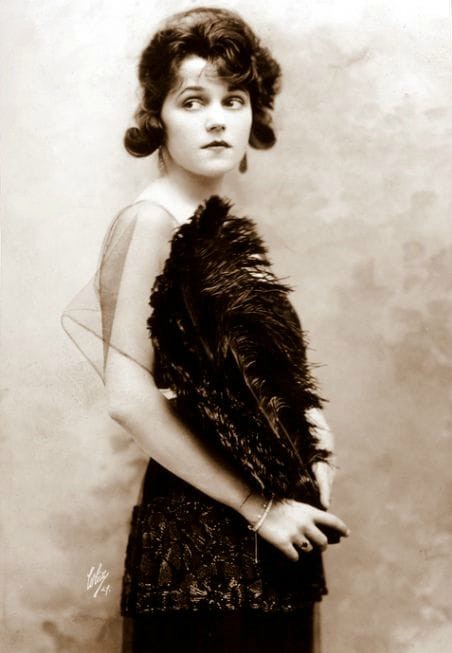
Anna is his quiet dutiful daughter and those responsible for casting her chose actresses who portrayed her as demure, but not dull. Meg (Anna) is not insipid on stage or screen. Alice Brady was the first “Meg”, and her performance in the Broadway production of Little Women which opened in October 1912 at the Playhouse Theatre, launched her career. This was the only full-length stage adaptation of the work authorized by the Alcott family then, subsequently revived several times on Broadway and frequently performed in regional theatres in the United States during the early to mid-20th century.
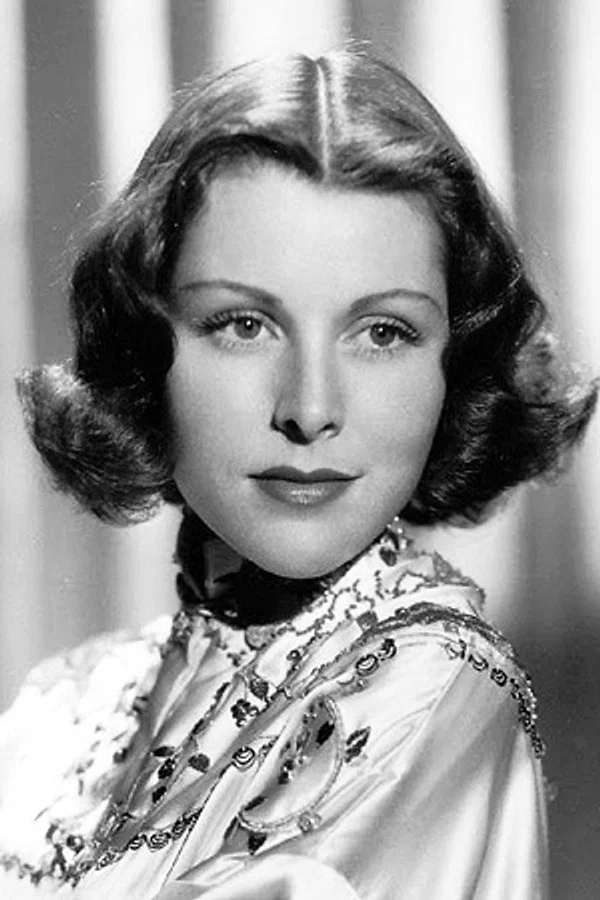
In 1933, following two silent films in 1917 and 1918, George Cukor directed the first sound adaptation of Little Women starring Katharine Hepburn as Jo (Louisa). Frances Dee as Meg. In one scene, Meg demands, “When will you stop your childish, romping ways?” Jo’s response: “Not until I’m old and stiff and have to use a crutch.”
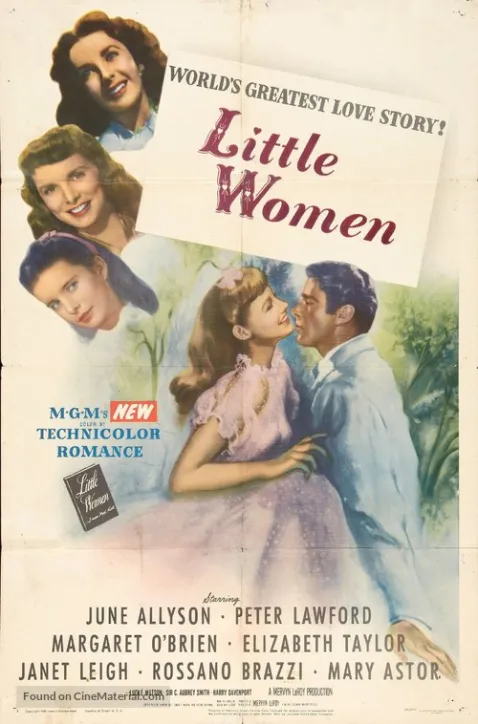
Janet Leigh plays Meg in the 1949 film version of Little Women, with Elizabeth Taylor as Amy, Margaret O’Brien as Beth, and June Allyson as Jo. “I was in love with the story as a little girl and even as a big girl,” reflected Janet Leigh about the movie. “And the movie said something. It spoke about family and the idea that we have to be honest with ourselves. As for the actresses we got along very well. We would play jokes, we giggled and laughed. I imagine we drove poor Mervyn LeRoy [the director] absolutely out of his gourd.”
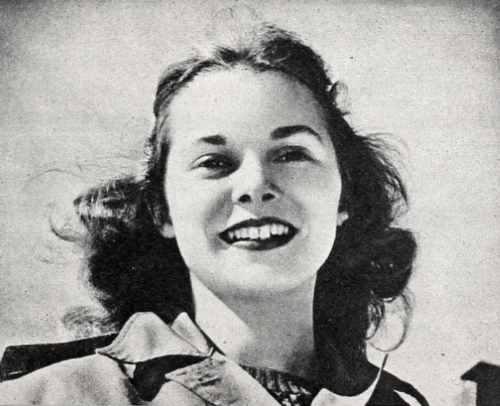
One reviewer claims that Janet Leigh is “a beautiful and motherly Meg who just gets more motherly as the film goes on. There’s no big buildup to her getting the part; MGM assigned the role to her and she took it. Janet loved playing Meg, and the movie was significant for her because she was given billing for the first time.”
Fast forward to the feature film of 1994, with Trini Alvarado as Meg March. This version is of particular interest to me as the director, Gillian Armstrong, is Australian and much admired for her directing of My Brilliant Career, one of my all-time favourites.
“I actually originally turned down the idea as I thought it was too similar to my first feature My Brilliant Career,” Gillian recalls in an interview. “Both period, both about a young female writer. However, my very clever producer Denise Di Novi convinced me that there was a whole generation who had not seen MBC and the message was just as important now. Then I reread Little Women and realized how timeless it was and how well observed and funny and that ultimately it was about sisters and family ( as well as the female role) and as a sister myself I wanted to do it.”
Anna may well have envied Trini Alvarado, who was only seven when she stepped into show business, joining her family’s dance troupe. “For Trini,,” says one of her admirers, “it was the age of footlights, rehearsal rooms, and the strange alchemy of performance. She learned early how to listen—really listen—to rhythm, to emotion, to the air between notes. That sensitivity would later shape her acting: precise, intimate, aching in all the right ways.
“Then came Little Women in 1994— Meg March, the steady, maternal sister, the one who holds the chaos together. The role could have been boring in the wrong hands, but Trini played her with a softness that never tipped into weakness. She understood the emotional architecture of the March family, knew how to anchor a room with a single look.”
That is an interesting turn of phrase: “the emotional architecture of the March family”. So many producers have made various constructs of the Alcotts, aka the Marchs, in mini-series, movies (the most recent in 2019 starring Emma Watson as Meg)), plays, operas and ballet. The 1969 ballet reimagines vignettes from the story, including Meg’s wedding to John Brooke. Many of the versions are available online for your enjoyment.
We may not agree with each actor’s interpretation nor with the saccharine nature of most productions. “With Meg’s character, her way of being a feminist is making the choice because that’s really, for me anyway, what feminism is about,” declares Emma Watson. “Her choice is that she wants to be a full-time mother and wife. To Jo, being married is really some sort of prison sentence. But Meg says, ‘You know, I love [John Brooke, played by James Norton] and I’m really happy and this is what I want. And just because my dreams are different from yours, it doesn’t mean they’re unimportant.’”
Meg as a feminist? I beg to differ. My view, considered in three versions of her life, and best realised in Anna Alcott and The Ladies of Lenox, actually comes from Louisa, who knew her better than anyone else could, as “the best woman I know, always reasonable, just, kind, and forgiving. A heavenly temper and a tender heart. A good sister to me all these years in spite of the utter unlikeness of our tastes, temperaments and lives. If we did not love one another so well we never could get on at all. As it is I am a trial to her and she to me sometimes, our views are so different. Dear, loving soul, God bless and keep her long to be our comfort.”
The lives of Anna and Louisa are inextricably linked, making it hard to say something new about either. Anna Alcott and The Ladies of Lenox places the life of Anna Bronson Alcott Pratt in the context of other women’s lives, not only her sister’s, and she is every bit as articulate and interesting as they are. Regardless of the many versions of her personality, she is not simply an unremarkable character compared to her better known sisters. She has a leading role in the never ending saga of the Alcotts.
References
Little Women: A List of Every TV and Movie Adaptation so Far
Janet Leigh reflects on her movie roles
Trini Alvarado: The Reluctant Star Who Kept Her Soul Intact – Poché Pictures
Emma Watson Thinks ‘Little Women’s Meg Is A Feminist Character, Just Like Jo