
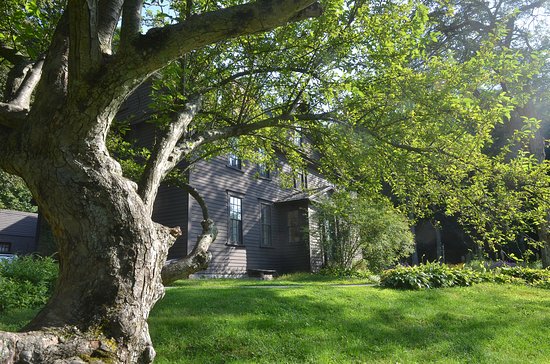
Family life is a theme throughout Anna and The Ladies of Lenox as the experiences of all the characters are given in domestic contexts. Families and the charming homes in which they live make fascinating subjects! A good measure of Little Women’s attraction is derived from its family orientation in a much loved home. All the characters in my book live in what are now significant historical homes.
In her journals, Anna (Meg) often reflects on her attachment to the Alcott family and Orchard House. Once living separately from them, as a married woman, she admits: “In a household like my father’s where poverty and trial and disappointment have been continually trying the tempers and hearts, very quick tempers, very warm hearts, there has necessarily been much disquiet and great clashing tempers, and though we have always dearly loved and gladly labored for each other, there has been a want of that harmony which is the great charm of family life.”
Anna’s devotion to the family, as well as Louisa’s, is compared to that of Catharine Maria Sedgwick whose adolescent years were marked by her mother’s chronic ill health and death in 1807, her father’s remarriage in 1808, and her engagement with her siblings’ growing families throughout her life. The other two ladies, Fanny Kemble and Carrie Tappan, are also drawn into the familial theme, both of them having two daughters. Anna is first seen caring for Carrie’s older daughter, Ellen, in Lenox.
“As a girl I worried constantly over my family’s financial situation,” Fanny tells Anna, whose anxiety for her family’s welfare, dominates her life. “My mother was chronically unwell and collapsed in hysterics when creditors threatened to repossess my father’s beloved Covent Garden Theater…”
In her childhood, Catharine Sedgwick was cared for by Elizabeth Freeman (aka Mumbet), a former slave whose freedom Theodore Sedgwick helped gain by arguing her case in county court in 1781. After winning her freedom Freeman accepted a job working for the Sedgwick family.
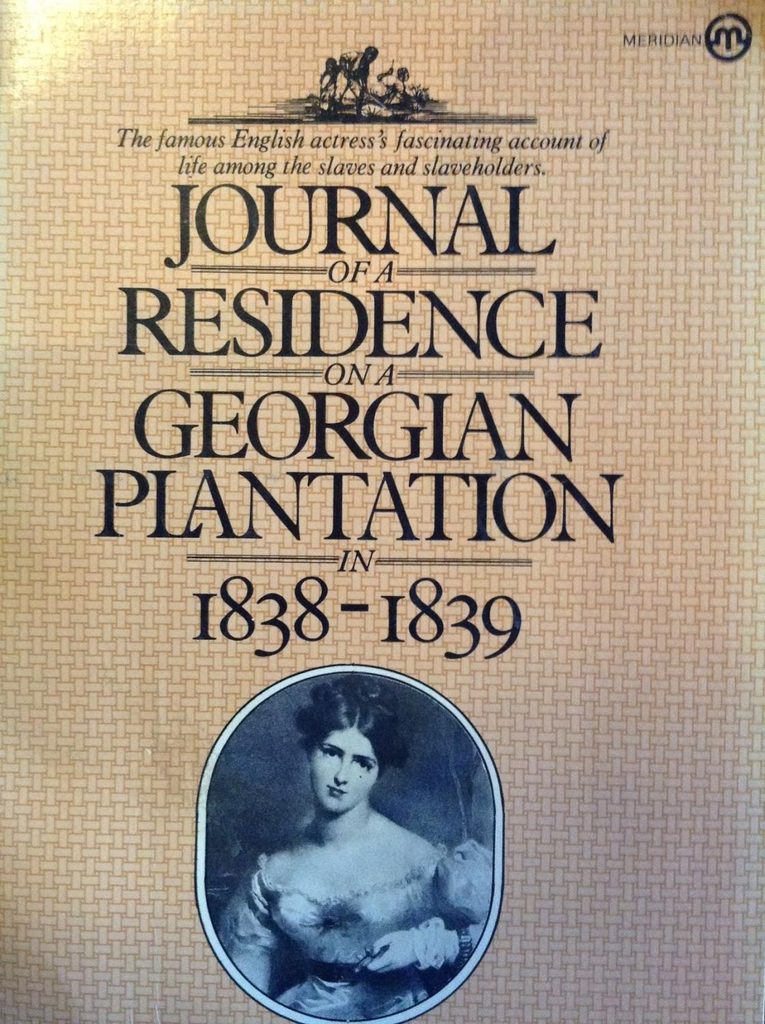
This opens the way for a socio-political theme to be threaded into my story, particularly the conflict before and during the Civil War, when strident abolitionist and proslavery voices divided the country. Fanny Kemble visited her husband’s plantation in the 1830s and wrote a journal about her observations there. “I should die if I had to live here,” she writes. Fanny’s husband Pierce Butler forbade her to proceed with publication, but once divorced, and with the Civil War in progress, she publishes Journal of a Residence on a Georgian Plantation in 1838-1839, received with approbation in England and America.
Fanny’s ambivalence about marriage is another theme explored by Anna and the ladies of Lenox. According to Catherine Clinton, author of Fanny Kemble’s Civil Wars, “the vibrant ingenue became a morose and restless matron. The eventual divorce and her bitter estrangement from her children devastatingly marred her private life.”
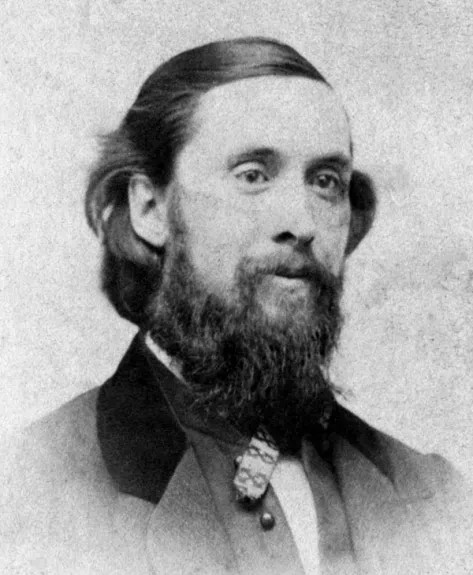
Anna marries for love, forsaking her stage ambitions and devoting her life to husband John and two sons. She becomes “such a home body, so bound up in my Johnny and my Freddy that I seldom went abroad and knew very little about what went on in the world outside my nursery door.” Meanwhile her sisters are advancing in their independent careers, one a writer, the other an artist. Louisa’s success as a writer, saving her family from utter destitution, compares with Fanny’s rescuing her family’s name and reputation with success on the stage.
Caroline Tappan’s marriage is seemingly tenuous. “Perhaps she regretted Emerson’s choice of husband for her, William, who was reputedly a shy and reclusive intellectual.” I suggest in my version of her life. “Anna remembered Sophia Hawthorne saying how much she liked William, with his ‘sweetest disposition and his shy dark eyes always gleaming with hospitable smiles for us’. Rumour had it that he lived a solitary life in the Red House, surrounded by books, while gregarious Carrie travelled abroad and built the beautiful mansion, Tanglewood, in Lenox, the setting for many lively social gatherings.”
Although courted by several men, Catharine Sedwick chooses to remain unmarried and devotes herself to her writing. She lives alternately in New York City and in the Berkshires at the various homes of her brothers and nieces. She writes about her opinions of marriage in Married or Single?,insisting on women’s right to choose whether to marry, rejecting the stigma of spinsterhood and offering a wider range of options for women in society, recognizing their need and ability to determine the course of their lives.
Various other themes are picked up in what becomes a saga reaching far beyond the appeal of literary and artistic women with their successes or lack of them in public life. Anna and the ladies of Lenox discuss their firsthand experience of dealing with mental instability and suicide, premature deaths and, eventually, their own mortality.
Anna, who has hovered in the wings, is busy in the last year of her life preparing a collection of plays written with Louisa when they were sixteen and seventeen. With some slight changes and omissions, the plays remain as written more than forty years ago by Meg and Jo, dear to the hearts of so many other “little women”.
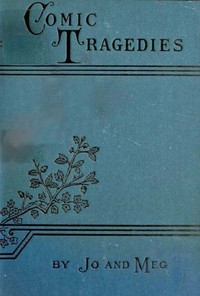
“This was a special undertaking, all her sisters gone, recalling alone the happier side of their young lives, and writing about the shared pleasures of playacting.” I suggest that “the publication of Comic Tragedies in 1893 was a triumph, for it was Anna’s childhood autobiography: life with Louisa, Elizabeth and May, aka Meg with Jo, Beth and Amy. Beyond the playacting was the kind of poverty that would have divided and destroyed many families. For Anna, family was everything and ‘theatricals’ took them outside the real circumstances to places of wonderful imagination…”
Anna and The Ladies of Lenox is my imaginative take on the life of Anna Bronson Alcott Pratt, not the definitive biography or memoir that I originally planned and wrote. Those other versions are scripts tucked away temporarily in the archives of “unpublished” that all authors have. They will have their day, as the 200th anniversary of Anna’s birth, in 2031, approaches. May I still be alive to see their publication!