
In Chapter 1 of Rescuing Árni, I refer to Árni looking out for the puffins to arrive in spring.
‘“They will be early,” predicted the uncle whose name he shared, Árni Ólafsson Thorlacius. “The weather has been exceptionally mild.”’
I was hoping the puffins would be early when I visited Iceland in April 2023, but they failed to appear. How disappointing. I had even booked a puffin tour, which we finally took just before we left Stykkishólmur in the Western Fjords. The day was freezing cold, the fishing boat looked to be barely seaworthy, and no life jackets were issued. My husband Bob and I were the only passengers! The fisherman pilot took us way out in the wildest water, even to the island of Elliðaey, where Árni lived for part of his childhood.
Not a single puffin to be seen although the fisherman vowed that he saw one. It must have disappeared very quickly.
Just the same, we were there, on location, where Árni lived in the 19th century. We visited the farm where he was born, as well as Norwegian House that was an important place in his growing up, and we stayed in the Hotel Franciskus, overlooking the harbour that Árni must have known well. I wrote the first chapter sitting at a small table overlooking that busy harbour.
In my previous books I had understood the importance of visiting the places associated with my subject’s life. This book was no different. We continued to the island of Rømø, where Árni also once lived. Have you heard of that island? I hadn’t. Rømø is the southernmost of Denmark’s Wadden Sea islands, off the coast of southern Jutland. The Wadden Sea is a vast area of shallow lagoons and tidal flats. The name Rømø comes from the Jutland word, “rimme’, meaning long embankment, and the Danish word, “ø”, meaning island.
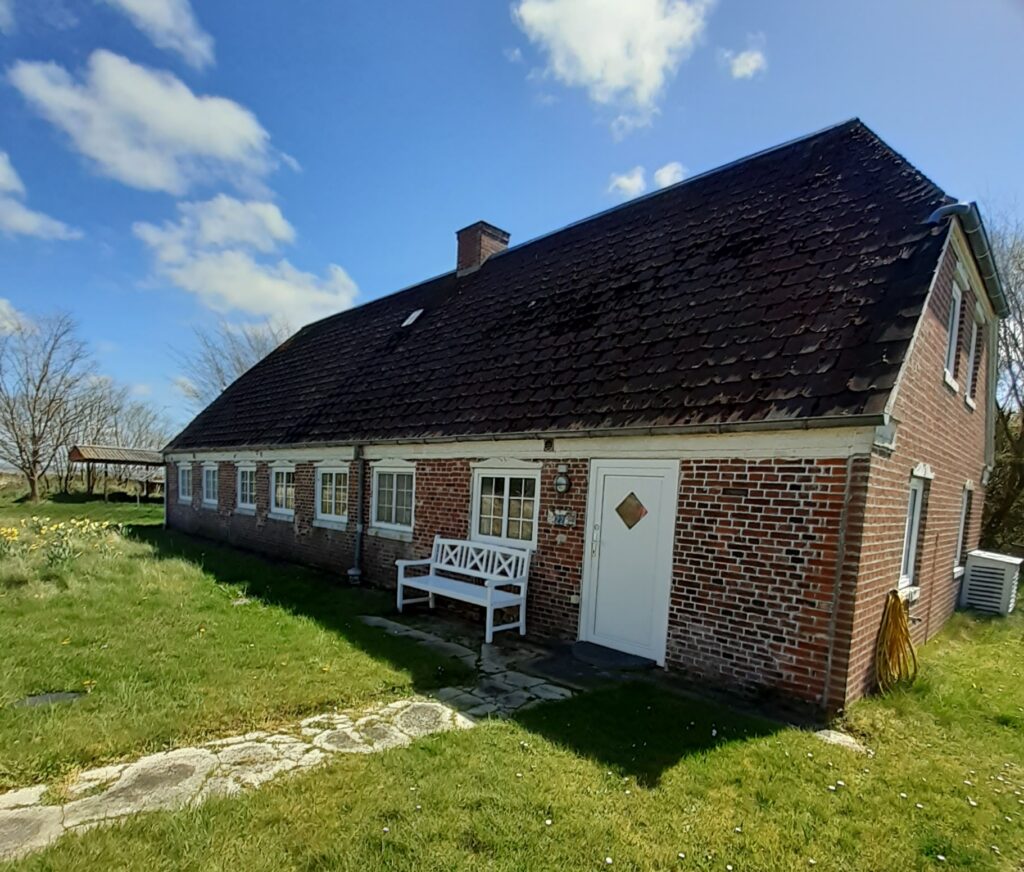
Árni’s Home on Rømø
In my book, your introduction to Árni on Rømø is made by describing an amazing sight we saw on the first day of our visit:
‘“It is called sort sol. The birds you are watching. Sort sol means dark sun, because at times the flock appears to cover the sun as it sets. The Wadden Sea is a favourite place for the stӕrer or starlings to leave their nests and gather together in one large flock, particularly at dusk. They are deciding where they will settle for the night.”’
That was a thrilling sight. We were able to see where Árni lived and familiarise ourselves with an island that was all salt and sand. “The island was bare, except for the lyng, heather, rensdyrlav, reindeer lichen, marehalm, sand ryegrass, and the tall grass, tagrør, or common reed used for making thatched roofs.”
I wrote the chapter about Árni in Denmark perched at a cramped desk in our hotel, Havneby Kro, and later propped up in bed in our tiny room in “Next House”, a Copenhagen backpackers’ hotel! Quite the adventure, booking and negotiating trains in Denmark, but that’s a story for another day.