“…Árni went alone to Súgandisey. He was a quiet, solitary boy, content with his own company, apart from Antonía. He wandered around the headland, listening to the voices of the lively ocean and the brisk wind in every direction; seeing the mountains hunched defensively over Breiðafjörður Bay, stoically waiting to shed their thinning white cloaks come the warmth of high summer. Water everywhere below him, waving, ready to welcome back boats and birds for the summer. Summer! Long sunshine hours, visits to Norwegian House, fresh fish and lamb on the dinner plates, running to the wharf to see the fishermen return with their catch of salmon and cod and other fish, gathering dung and driftwood for the fire, watching the puffins, setting out in boats to other places, riding on the back of Antonía’s horse, his arms around her waist.
Soon it would be the First Day of Summer, on the Thursday between the 18th and 25th of April. Guðný said that would be the 22nd and there would be a gift from her with her cheerful smiling greeting, “Happy Summer, Árni!”
“It’s a good omen,” Árni’s foster father told him, “if summer and winter ‘freeze together’, frost on the night before the First Day of Summer.”
He always left a dish of water out in a sheltered place, to show whether the temperature dropped below freezing.
Árni thought it unlikely that summer and winter would “freeze together” that year. The air was still colder over there on Súgandisey, though, biting through his thick homespun jacket and nipping his ankles through the woollen stockings, now well-worn and much mended at the end of winter. He took deep breaths, eyes closed, of clean arctic air after so many months confined indoors. He opened his eyes and there was his shadow, large and still, waiting to move with him all over and around Súgandisey.
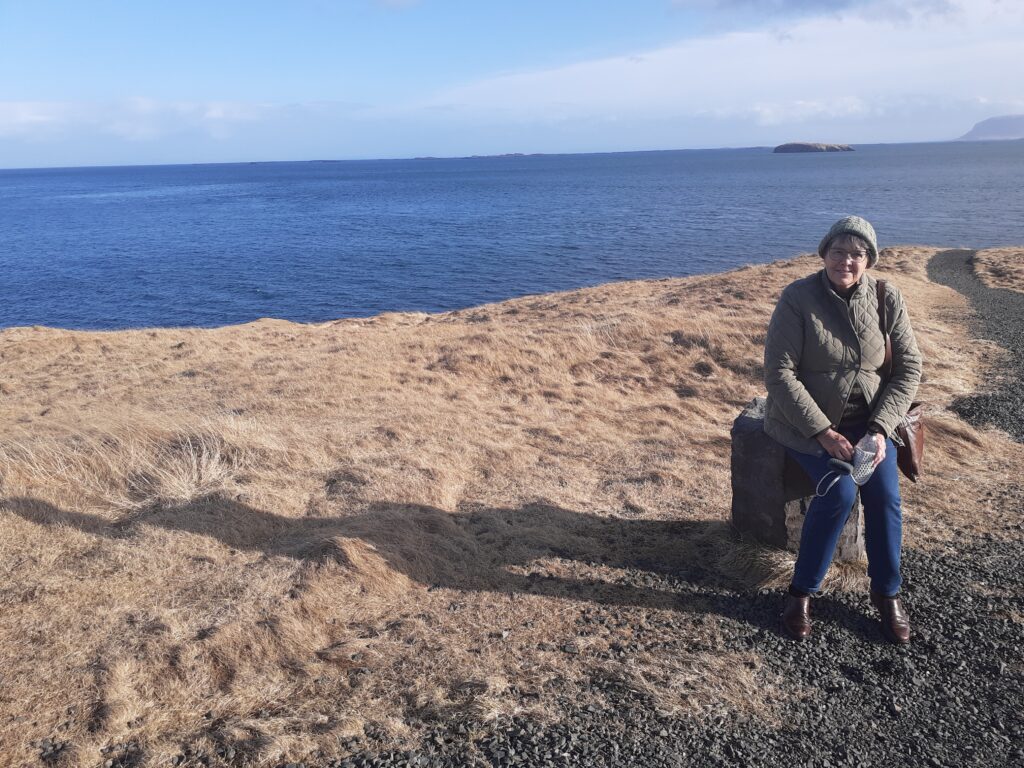
On the highest point the wind usually threatened to blow him sideways; a less solidly built child might have trouble standing there. Like all Icelandic children, Árni learned early in life to lean into the wind. Today, though, the wind was less fierce. He scanned the skies for the elusive puffins. He imagined them here, busily building their shallow nests in the grasslands on the top of the cliffs, laying their eggs and squatting there contentedly till their chicks hatched. The ground was thickly matted with brown grass, good green grazing soon for the sheep when farmers brought them over in the summer.
“Tough, stubborn creatures!” accused Guðný Palsdottir, his foster mother, who knew all there was to know about sheep. “Like the Vikings they arrived with.”
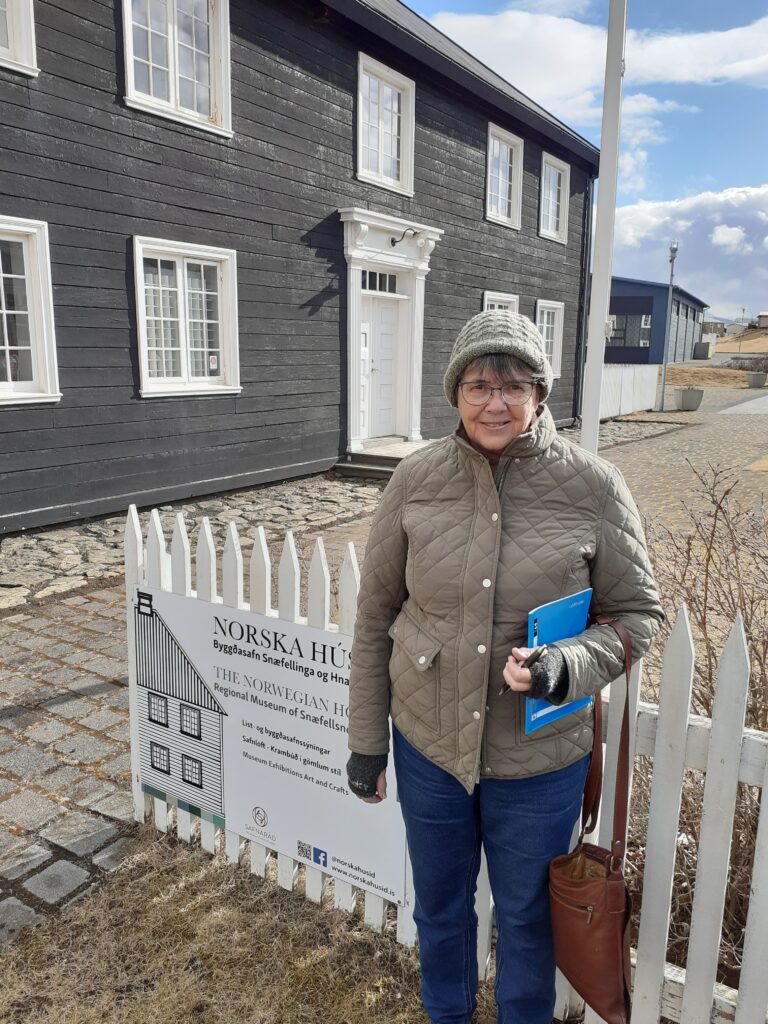
He looked back towards the village, dominated by the Norska Húsið, Norwegian House, his uncle’s home. The home, built in 1832 of dark bevelled wood from Norway, was the first two-storey residence in Iceland. Uncle Árni Ólafsson Thorlacius went to Norway to bring the wood back in his own ship, as well as a builder from Copenhagen to supervise the construction…”